Showing posts with label technology. Show all posts

Sunday, 26 January 2020

What's going on in our brain during everyday life- MIT Technology Review

MIT Technology Review on their tweeter account, tweeting "DeepMind’s new algorithm has uncovered new details about how dopamine helps the brain learn." “It gives us a new perspective on what's going on in our brains during everyday life.”


Wednesday, 22 May 2019

The US just warned that drones made in China could be used as a way to spy, but not in the way you think

The US Department of Homeland Security is concerned that China-made drones and the data they can collect could potentially get into the hands of the Chinese government , according to aDHS alert obtained by CNN .
DJI spark drone
BusinessInsider USA Images
DJI spark drone
The US Department of Homeland Security (DHS) is concerned that China-made drones and the data they can collect could potentially get into the hands of the Chinese government, according to a DHS alert obtained by CNN .
The alert, reportedly sent out on Monday, claims that Chinese-made drones have the ability to share information and data to a server that isn't exclusively controlled by the drone manufacturer.

It's unlikely that live video feeds from China-made drones could be shared with the Chinese government, and audio feeds aren't usually available as many drones don't come with microphones. With that said, some drone software saves snippets of video and images that could be saved on a drone company's servers. Information like flight and operations data, too, could reveal where, when, who, and potentially why a drone is being used.
As part of a 2017 national intelligence law, China expects its citizens and companies to support its national intelligence activities. The alert reportedly suggests that Chinese drone companies could share or be forced to share data collected from their drones abroad, including those in the US.
While the alert didn't single out any specific manufacturers, Chinese drone manufacturer DJI holds a significant majority of the drone market share in North America up to 80%, according to an industry analysis from CNN.
In 2017, the US Army issued a ban of DJI drones after alleging that the company shared critical infrastructure and law enforcement data with the Chinese government.
DJI said in a statement to Business Insider that it has total control over how the data stored in its servers is handled, and that its technology has been independently verified by the US government and US businesses. The company also assured that customers can enable options that would protect their data, as per the DHS's reported recommendations. As for corporate or governmental use of DJI drones, the company said it offers models that don't transfer data to DJI directly, or over the internet at all.
DJI's full statement is below:
"At DJI, safety is at the core of everything we do, and the security of our technology has been independently verified by the U.S. government and leading U.S. businesses. DJI is leading the industry on this topic and our technology platform has enabled businesses and government agencies to establish best practices for managing their drone data. We give all customers full and complete control over how their data is collected, stored, and transmitted. For government and critical infrastructure customers that require additional assurances, we provide drones that do not transfer data to DJI or via the internet, and our customers can enable all the precautions DHS recommends. Every day, American businesses, first responders, and U.S. government agencies trust DJI drones to help save lives, promote worker safety, and support vital operations, and we take that responsibility very seriously. We are committed to continuously working with our customers and industry and government stakeholders to ensure our technology adheres to all of their requirements."
The DHS alert comes a week after an executive order from President Donald Trump effectivelybanned the sale of Huawei telecoms equipment in the US.
See Also:

Huawei Founder Believes New U.S. Order Will Have No Impact on Sales


BY JOE MCDONALD / AP 
MAY 21, 2019
(BEIJING) — The founder of Huawei expressed confidence Washington’s curbs on sales to the Chinese tech giant will have little impact and said Tuesday it is discussing “emergency relief” from Google for possible loss of services for its smartphone business.
Huawei Technologies Ltd., the biggest maker of network gear for phone carriers, has “supply backups” if it loses access to American components, Ren Zhengfei told Chinese reporters. His comments were broadcast by state TV and other outlets.
The Trump administration’s order last week steps up pressure on Huawei, which Washington says is a security risk, and threatens to hamper sales of network gear and other products. Huawei is the No. 2 global smartphone brand but relies on Google’s Android operating system and U.S. components suppliers.
China’s government repeated its promise to defend Chinese companies abroad but gave no details of what Beijing might do.
American officials say Huawei and other Chinese telecom equipment vendors are a risk because they beholden to the ruling Communist Party. Huawei denies accusations it facilitates Chinese spying.
The U.S. controls “will have no impact within this company” and none on development of next-generation telecom technology, Ren said. He said some low-end business might be affected.
Huawei has developed its own chips for some smartphones and other products but relies on American suppliers for its most advanced components.
Huawei and Google are discussing possible “emergency relief measures” for its smartphone business, which might lose access to some of the American company’s services, Ren said. He gave no details.
Google, a unit of Alphabet Inc., said Monday its basic services still will work on Huawei smartphones, which use its Android operating system.
Google gave no details of what services might be curtailed. But the company would be barred from transferring hardware or software directly to Huawei. That would affect maps or other services that require the American company’s support.
Huawei trails only Samsung of South Korea in global smartphone sales. Industry analysts say it might struggle to compete if it cannot line up replacements for Google services that run afoul of the U.S. curbs.
“I should say this impact will be very big, but Google is an extremely good company,” Ren said. “We are discussing emergency relief measures.”
A foreign ministry spokesman accused Washington of misusing “state power” to hurt foreign companies and interfere in commercial markets.
“The Chinese government has determination and ability to safeguard its legitimate and lawful rights and interests,” said the spokesman, Lu Kang.
Apple Inc., Huawei’s main American rival in smartphones, makes a prominent potential target for Beijing. The company’s iPhones are assembled in China and the country is its No. 2 market after the United States.
Attacking Apple might be politically awkward for Chinese leaders who have accused Washington of mistreating Huawei. Business groups say Chinese officials are trying to reassure American companies they are welcome despite Beijing’s tariff war with President Donald Trump. But regulators have an array of tools including tax and safety inspections that can hamper a company with no official acknowledgement it is targeted.
Huawei’s U.S. sales collapsed in 2012 after a congressional panel told phone carriers to avoid the company and its smaller Chinese competitor, ZTE Corp., as security threats.
Despite that, Huawei’s sales elsewhere have grown rapidly. The company reported earlier its global sales rose 19.5% last year over 2017 to 721.2 billion ($105.2 billion). Profit rose 25.1% to 59.3 billion yuan ($8.6 billion).
Huawei smartphone shipments rose 50 percent over a year earlier in the first three months of 2019 to 59.1 million, while the global industry’s total fell 6.6%, according to IDC. Shipments by Samsung and No. 3 Apple declined.
Last week’s order, however, threatens to disrupt Huawei’s global business by limiting access to components for products sold everywhere, not just in the U.S. market.
It will take effect after a 90-day grace period that will allow some transactions to allow telecom operators that depend on Huawei equipment for “critical services” time to make other arrangements, the U.S. Department of Commerce said Monday in a notice on its website.
Washington has tried to persuade U.S. allies to shun Huawei as a supplier of fifth-generation technology. Australia, Taiwan and some other governments have imposed curbs on use of Huawei technology, but Germany, France and other countries still do business with the company.

Google just gave Huawei a wakeup call The Chinese company urgently needs to step up its software game.

PA Wire/PA Images
It's been a tumultuous week for Huawei. Five days ago, President Trump declared a national emergency to ban the sales and use of telecom equipment that pose "unacceptable" risks to national security. While the executive order didn't explicitly name countries or companies, it tasked the Commerce Department with drafting enforcement plans. Hours later, the department added Huawei to its so-called entity list, indicating it believes the company is violating "national security and foreign policy interest."
A few days later, the department eased up on the ban slightly, with a spokesperson saying it might grant Huawei a temporary license to prevent the interruption of service for existing networks. (Update: At 6 PM ET on Monday, the Commerce Department issued that temporary license.) Still, companies like Google, Intel and Qualcomm have since announced that they will comply with the ban, suspending service and supplies to the Chinese electronics giant.

What might change

Not all of these are devastating developments. While a Bloomberg reportsaid chipmakers like Intel, Qualcomm and Broadcom have told staff they won't be selling parts to Huawei until further notice, the Chinese company is capable of making its own chips. Sure, it uses lower-end Qualcomm processors for some of its midrange phones. But in recent years, it's been moving its handset business towards adopting its own Kirin chipsets and Balong modems. Huawei's Kirin 900-series options of late have proven to be powerful enough to rival Qualcomm's high-end Snapdragons, so it's likely its phones won't suffer performance setbacks by switching.
It gets trickier with laptop processors. The space is dominated by Intel, and, as far as we know, Huawei has had no experience making PC chipsets. Even if it does or, and this is less probable, if it partners with AMD to use its CPUs, consumers tend to prefer Intel-branded components. It's most likely that, for the foreseeable future, Huawei's laptop ambitions are on hold.

The loss of Android

The heaviest of the blows, though, is Google pulling Android support. The vast majority of Huawei's phones and tablets run Android, meaning a large portion of its consumer portfolio would be affected. Plus, software isn't Huawei's strong suit, so even if it does default to the backup OS it's been prepping for such situations, chances are the experience will fall short.
To be clear, Huawei is still allowed to use Android Open Source Project (AOSP) to build its own system, and Google said, "For users of our services, Google Play and the security protections from Google Play Protect will continue to function on existing Huawei devices." If you currently own a Huawei phone, you will still be able to access your third-party apps. Those who rely on Google's own services like Gmail, Google Drive, Maps and YouTube, for example, will likely need to find alternatives. Considering how many people are locked into these options and enjoy the convenience of having their information synced across various devices, though, this might be a deal-breaker for some.
The loss of Android support also means Huawei's handsets will no longer get OS updates. So if you were holding out for Android Q or even Android Pie to arrive on your device, you might have to give up.
All is not lost, though. Huawei said in a statement it will "continue to provide security updates and after-sales services to all existing Huawei and Honor smartphone and tablet products." We also learned earlier about its backup OS that might be an adequate replacement for Android.
Huawei P30 and P30 Pro hands-on
Given all the complaints lobbed at Huawei's EMUI software on its phones, it's unlikely the company's alternate OS will be impressive. Its stab at a wearable OS on the Huawei Watch GT was lacking compared to Google's Wear OS, too.
But in spite of its software quirks, Huawei was still able to sell enough smartphones in 2018 to overtake Apple as the second-largest phonemakerin the world. Thanks to outstanding devices like the Mate 20 and P20 Pro, the company sold 200 million units that year, even without access to the US market. Huawei even stated it aimed to be the world's biggest smartphone seller in 2020, though that seems an unlikely goal now.
The company clearly doesn't need the US: It has been able to thrive off its business elsewhere in the world. The more pertinent question now is whether the rest of the world will continue to buy Huawei devices without Android. Given the popularity of Google's OS around the globe, Huawei seriously needs to deliver adequate app and OS replacements if it wants to survive outside its native China. Even if the ban is lifted and suppliers resume business with the company, it can't continue the way it says. Some of Huawei's most important partners have just turned their backs on the company over serious allegations, and there's no telling when an improved relationship might turn sour again. If Huawei wants a chance to avoid losing its footing, firming up its software and proving its products are worth using has to be a top priority.
source: engadget

Selfie Quadcopter Conquers—Takes Nigeria by Storm...

Did you know a new Nigeria selfie trend has taken off worldwide?
Phone selfies are a thing of the past. The truth is, people are bored of taking phone selfies...
At first you had your standard phone selfie, after that the 'selfie stick', and now selfies have evolved to a whole new level!
Before anyone knew what was happening, thousands of people in Nigeria started uploading jaw dropping selfies from every angle. These selfies went viral over social media and soon everyone wanted in!
It did not take long before this new type of selfie went viral worldwide!

What is it?

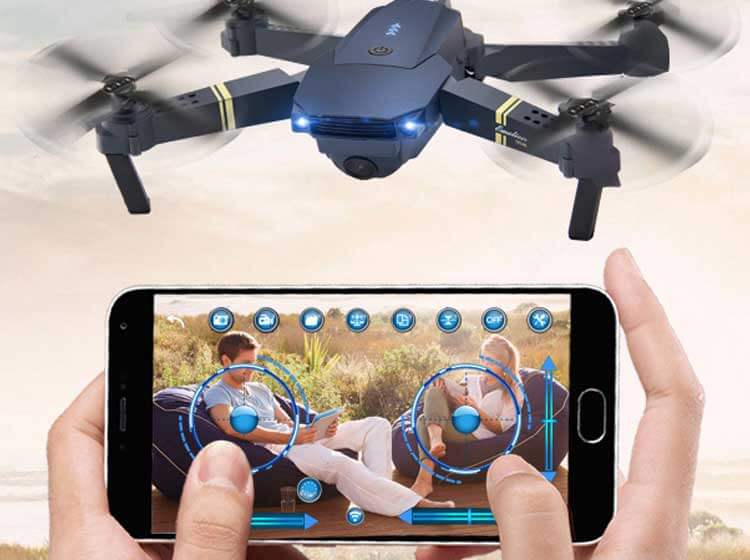
It’s the brand new Drone X Pro, a breakthrough in drone technology that's made so that anyone can fly it with ease. It's makes taking breathtaking selfies fun and easy! 
Two German engineers found that drones were heavy and hard to travel with.
So, they put their heads together and designed an ultra-compact, lightweight drone, with all the benefits of a top HD model.
The Drone X Pro is born—it’s easy to control, stable and it can live-stream and record to your phone.
People starting using it to take 'the ultimate selfies' - the results are astonishing...


How does Drone X Pro work?

We were surprised by how fast and easy it was to get up and running! Start by installing an app (just scan the QR code in the manual). It’s take just minutes.
After that, just install the battery in your drone and launch the app. You’re now ready to fly your Drone X Pro!
Here's the best part: flying is extremely easy. Flying the drone is smooth and natural as riding a bike. Our friend's son came over the office, and he figured how to fly the drone in just minutes. It’s remarkable how stable and smooth the controls are!
Once the drone is in the air engage the built-in camera. You can now take jaw dropping selfies, and even videos. Take pictures from angles that are impossible with a phone selfie. You're friend will be in awe!

Here's the Drone X Pro in action:

How Much Does it Cost?

If you're like me, you're probably guessing a breakthrough drone like this must go for $300, even $400. For a limited time, they're only selling for $99, (deal only available online, $199 in shops). It's a great deal for drone of this level.

Where to Get a Drone X Pro

That's simple. You can get yours from the official website.

Some amazing features of this drone...

Why is this drone so special?

The Drone X Pro is portable, affordable, easy to use, and has a stunning HD camera.
The drone is about the size of a large screen smartphone. Its so compact it fits in any pocket or handbag!


There's no experience required to fly this drone. You can easily control, fly and take amazing pictures and videos with this phone, even if you've never flown a drone in your life.
Just take a look at some of the amazing pictures and videos you can start taking...
Flying this drone is so simple, that you can focus on taking amazing HD pictures of nature, friends, and family. It's a blast!
Did you know this drone is made of cutting edge ABS plastic? Making it lighter and stronger than most drones on the market.

Conclusion: Is Drone X Pro worth it?

Because of the easy of use, portability, low price, and compact size, it's absolutely worth it! Just imagine amazing pictures and videos you'll be taking with your new Drone X Pro. If you’ve never flown a drone before, this is the time to start!

How Can I Get a Drone X Pro?

If it’s still in stock, here is how you can get yours:
1) Order your Drone X Pro from the official website.
2) Install the Drone app to your smartphone (Android and iOS). Then connect to your Drone.
3) Start taking stunning photos and videos of you and your friends or family!
It’s That Simple!


Source: Breakthroughtrend

Tuesday, 21 May 2019

GM will deliver over-the-air updates to 'most' vehicles by 2023


Today, General Motors unveiled its new electronics system. The platform will make "smartphone-like" over-the-air software updates possible, and it should be rolled out in most GM vehicles by 2023, the company says. We'll see it first in the 2020 Cadillac CT5 sedan, which should go into production later this year.


Tesla has been able to update its software via the internet for years, but conventional automakers have been slow to follow suit. GM is one of the first to introduce the capability, and its new electronic system will be able to manage up to 4.5 terabytes of data processing per hour -- that's five times more than GM's current systems can handle.
GM says cybersecurity is a "key pillar" of the platform. And, according to Reuters, the company previously said it would not use over-the-air updates for safety-critical systems, like braking. While there are potential safety and security implications, over-the-air updates will likely become standard industry wide as automobile manufacturers and tech companies alike double down on automotive software.

Friday, 17 August 2018

A Robot In My Workplace An Advantage or Disadvantage?

As technology is developing at a rapid speed, we can't help but ask the question: Are Robot Going To Take Over Our Jobs, Will artificial intelligence make it even easier? How will automation really affect the global workforce and economy? Will automation free our time for leisurely pursuits? Or will we get even busier? and many more questions which may arise

Robots were once known only for the manufacturing business but today they are very much part of many workplaces. Artificial Intelligence is making the Future looking even more promising.

Imagine a robot doing most of the major tasks of managers like using data to evaluate problems, making better decisions, even setting goals, and monitoring team performance.

Now that the corporate world is also on the apex of entering the robotic age, let’s see what advantage and disadvantage this technology offers the business world.


Advantage

  1. The first and the foremost advantage of having robots in workplaces is their cost. Robots are much cheaper than humans and their cost is now decreasing.
  2. Better decision making: In this era of information overload, the human brain is inept of processing the vast sea of data to translate information into knowledge.
  3. Robots are significantly stronger and faster than average humans. 
  4. Robots are programmed by humans; hence they cannot refuse an order and can be also used for any dangerous and unwanted work where humans may deny to offer their services. For example, many robotic probes have been sent into space but have never returned.
  5. A robot never get tired of tasks which they have been programmed to do and can work 24x7, The human brain gets tired if it’s working continuously
You might be interested in Two ways in which you can make money from Google

Disadvantage 

  1. Robots can certainly handle their prescribed tasks, but they typically cannot handle unexpected situations/mundane tasks.
  2. Robots installed in workplaces still require manual labour attached to them. Training those employees on how to work with the robots definitely has a cost attached to it.
  3. If ultimately robots would do all the work, and the humans will just sit and monitor them, health hazards will increase rapidly. Obesity will not be far from the list.
  4.  It is said that a Robot saves time, but when in a situation where a robot malfunctions you would require extra time to fix it/them.

Cultural Traits of Successful Companies

Companies usually start out with baronial intent: An idea, a product, or a culture that its founders hope will be different--the one that stands out among the many. They hope to be the kind of company that others seek to emulate and the most talented people wants to work for.

Frequent questions have been asked regarding what possible traits should a company posses in order to be successful, so i took my time to list out three of those features every company must have: before you proceed ask your self these question do i have what it takes to start up a company?

Cultural Traits of Successful Companies

3 Three Traits A Successful Company must Posses  

  1.  Products: It is one thing to create a product and it is another to create a product that consistently provide a superior customer experience, Facebook was not the first social media network neither was Amazon the first online retailer. But the products and services the render consistently delight customers by giving them what they want or need in ways that competitors can't even come close to.
  2. Sacrifice: Those who intend to start and grow a successful business would have to give up many personal benefits in order to achieve their goal, and when i talk of sacrifice i am talking about: relationships, time and other opportunities. If you are willing to give up all these things you might be one of the winners.
  3. Persistent: Avast number of entrepreneurs who are successful would tell you this never give up, always look for a way out of every situation where you find you self and you are bound to succeed
Note:  Launching a business takes courage, money, focus, time and you have no guarantee of being successful. Are you ready to give up your financial security? Can you cope with the stress attached? If risk leaves you fearful, this is not the path for you. Conversely, if you crave adventure and are the ultimate dreamer, you will find true happiness in taking this wild ride.

Posts that might interest you

5 of the Best Blogging Tools

Blogging has proven to be one of the best ways to grow your business online. Blogs give you the opportunity to showcase your brand as an authority, publish consistent content and get more traffic to your website.

However, just like with social media marketing, paid advertising and other online marketing strategies, there are several different steps and tasks involved with blogging.
Creating, organizing, publishing and promoting content can take a lot of time. Luckily, there are some great blogging tools that help make the process easier for marketers who want to implement blogging into their content marketing strategy.

I have compiled a list of five (5) blogging tools to make your audience closer to you.


1. WordPress

The first step in the blogging process is to build a place for all of your content to live. WordPress is the most popular Content Management System (CMS) available and it’s perfect for blogging. WordPress powers over 74 million websites like: Techcrunch, mashable and many others and is particularly popular among businesses. Some of the key benefits of WordPress for blogging are:
  • Ease of use
  • Simple content editor
  • A wide selection of themes/templates to create a professional looking blog
  • A variety of free and premium plug-ins that allow you to add cool features to your blog without needing to know how to code or develop
  • A built-in blogging feature
  • Painless integration with several other tools you may use
  • A very helpful and active support forum and community
  • You can have multiple users with different permission levels so your entire team can contribute
you can also add any existing site you have built else where to WordPress.

2. Yoast SEO Plug-in

One of the most popular ways to get traffic to your blog posts, particularly if you don’t have an established audience, is through search engine optimization (SEO). Organic search traffic comes from people who use Google, Bing or other search engines from looking up specific phrases. Once they receive their results, they can enter your site. This is why it’s important to have a high rank on search engines, so you get more traffic to your blog.
There are a variety of factors that impact SEO, but the two major categories everything falls under are:
  1. On-page factors: Such as meta titles, Web development, urls, the actual content on each page and page structure
  2. Off-page factors: Such as backlinks, mentions of your company/website online and social factors
Yoast SEO is a WordPress plug-in designed to help you improve some of the most important on-page SEO factors–even if you aren’t experienced with Web development and SEO. This plug-in takes care of everything from setting up your meta titles and descriptions to creating a sitemap. Yoast even helps you tackle the more complex tasks like editing your robots.txt and .htaccess.

3. Canva

Having a blog post full of text makes your content less appealing and will immediately turn visitors off. Adding in visuals like infographics, charts and other images can help break up your content and make it easily digestible.

The problem that a lot of bloggers run into is figuring out how to integrate images into their content. This leads to bloggers loading their posts with stock images that aren’t eye catching or of any value to the post. Canva is a free tool that makes it easy to create custom graphics to go with your blog posts.
Whether you want to make infographics, featured images or just a few visuals to go within your posts, you can do it all in Canva.

One of the best things about Canva is it comes loaded with templates so all of your graphics can be sized perfectly for each specific social media site. If you want an image to be easy for your readers to Pin, choose the Pinterest template. Or maybe you want something that people can Tweet. You’d then just choose the Twitter template.

4. Google Analytics

Your content is created and you’ve been promoting it through social media and email marketing tools. Now, you need to know the results of your efforts. Google Analytics is the most popular blogging tool to track the performance of your content.
The more you log-in and check your analytics, the more comfortable you’ll become with the dashboard. If you don’t have Google Analytics installed on your blog, make it a priority.

5. Readability Test Tool

Would it shock you to find out the average college freshman reads at a 7th grade level? That means if your writing is too technically advanced, your audience may not fully understand your content.
The Readability Test Tool helps you ensure your blog posts are easy to read. It uses the top readability indicators to let you know the approximate grade level of your content.

You might also like: Two ways in which you can make money from Google

Can i get rich with technology?

The question can i get rich with technology is a little bit conning, the question people should be asking is that how can i harness the wealth of technology.

In the era we are in Technology is the fastest way to make money, Yes i said it it is indeed the fastest way to make money with its never ending opportunity creation, weather it is blogging, video edition/creation and many more. So the answer to that question is YES technology can make you rich all you have to do is understand how it works.


The main goal of getting rich with technology is to find a problem and then provide a solution, Facebook was not the first social media platform but it is now the most popular media platform because it brought about a solution no other social media could,  neither was apple the first company to produce an mp3 player but it also brought about a solution that its competitors didn't.

You might be interested in: Two ways in which you can make money from Google


Or rather still you can find a solution and make it better ( what i mean is find a solution that has been provided and make i better ).

I consider the five steps below the key to making money.

Read also: Cultural Traits of Successful Companies

Five Steps To Getting Rich 

  1. Stop obsessing about money:  Make money a by product and not your main goal. in other words shift your perspective.
  2. Create a list of people you help in every possible way: by doing so yo get to track their progress and see how you affected their lives, weather in a positive or negative way, because the success of people you help is also your own.
  3. Stop thinking of millions you can make and start thinking of millions yo can serve:When you have only a few clients and your goal is to make a lot of money, you're incented to find ways to wring every last dollar out of those customers.
    But when you find a way to serve a million people, many other benefits follow.
  4. See making money as a way to make more things.
  5. Make it your goal to do one thing better than anyone: Excellence is its own reward, but excellence also commands higher pay, greater respect, greater feelings of self-worth, greater fulfillment, a greater sense of achievement... all of which make you rich in non-monetary terms.
     

Technology a cost for Humanity

Technology has in no-doubt made our work easier and has completely taken over our lives and, for the most part, we’ve let it. so is it safe to say technology is a price to pay for our humanity or a cost for humanity.

Technology makes our lives easier but at what cost, imagine the GPS system were to go offline, all our connection would be left handicapped, many would be left wondering where to go and cant even locate their own houses, we now live in an era where loosing your phone is like loosing a part of your brain.
In this book called Re-Engineer HumanityEvan Selinger, professor of philosophy at the Rochester Institute of Technology, and Brett Frischmann, professor of law at Villanova University, argue that technology is causing humans to behave like mere machines.

Having our fundamental functions taken over, it is said that algorithms, robots, and consumer devices have begun to be dissociate us from our own humanity. The text isn’t a luddite-like rejection of technological progress. but one which evaluates the way in which we let tech into our lives.


With technology taking over humans tend to loose their jobs everyday, a question regarding this topic was raised on Quora,
What would happen if humans lost 50% of all the jobs in the world to robots?
And was Answered by Glenn Luk, Invests in technology and growth-oriented companies, on Quora.
where he said that What if humans lost 90% of all jobs in the world to robots, automation and technology? Where would we be today.
  • One hundred years ago, the vast majority of people in the world worked on farms. The invention and proliferation of technology has made it possible so that a small minority of farmers (2% here in America) can provide food for all.
  • A little over one hundred years ago, there were millions of jobs related to the main mode of local transportation of the day: the horse-drawn carriage. All of those jobs building carriages, manufacturing buggy whips, raising horses and scooping up their excrement off the city streets. Again, progress and technology have all but eliminated those jobs, and here we are.
  • Seventy years ago, a little over 3% of the U.S. workforce was employed by the railroad industry moving freight and passengers around the country. Today, only 0.1% of the workforce is involved in the railroad industry, yet it moves nearly three times the amount of freight around the country [1].
  • As described in the movie Hidden Figures, NASA used to employ human computers to calculate flight trajectories that helped get our spaceships into the sky. Today the aggregate computing power of human computing from that era is dwarfed by the device sitting in your pocket.
These are just a few examples of how jobs and the nature of work has changed over the years, pushed forward by unshackling humanity’s collective ingenuity to solve problems. In my view, robots (and artificial intelligence) are merely another chapter in humanity’s ongoing drive towards greater productivity and innovation.

Dealing with disruption (better this time around)
However, before we all lock arms together for a massive Global Group Hug and embrace this Utopian future of unlimited abundance, we need to be ultra-aware about how disruptive change caused by new technology can be the root cause of global conflict.

I remember a time not so long ago when Globalization was praised by the masses, immigrants were welcome, new technologies and inventions were taking the world by storm and the economy was making everyone wealthy.
I am talking about the mid-90s. The 1890s, that is. Over the next half-century, the world underwent what is arguably the most destructive period it had ever seen. Rapid changes in technology ultimately led to massive changes in society — everything from politics (end of the Colonial era to rising Nationalism), communications (the telephone), to culture (the rise of car culture), urban planning (the invention of modern suburbia), to shrinking household size.

Rapid technology change is disruptive and we need to be prepared for the changes. Fundamental questions need to be answered:
  • How do you deal with the challenge of equitable wealth distribution?
  • What should even be considered equitable?
  • What if robot technology is concentrated into the hands of the very few?
  • What changes need to be made in our current political system to adapt to this new world?
  • How does the concept of Westphalian sovereignty work when borders are no longer defined just in physical terms?
  • What if technological change happens even faster than we can predict today?
  • Etc.
While I remain an optimist, I do sometimes worry that humanity is not yet adequately prepared to answer these questions. Or that it will take explosive changes — particularly worrying in the Atomic era — to ultimately get to the next stage of human development. 

I think for as much time and effort as our amazing entrepreneurs put into trying to innovate and push human productivity forward, we also now need to spend time figuring out how society needs to evolve — in as non-disruptive and human-focused way as possible — to accommodate new technologies.
We have created massive wealth, enough to go around many times over — and now we need to learn how to share this bounty in a fair and equitable way that also creates the right incentives for wealth creators to continue pushing forward into the frontier.

20 Ways To Improve Your Online Presense

Increasing your online presence is absolutely crucial to the success of your business. Everyone knows the value of social media and search engine optimization, but few people know the tips and tricks that make some campaigns succeed and others fail. Regardless of your industry, all businesses should be doing the following tips.

20 Ways To Improve Your Online Presense

20 Ways To Improve Your Online Presence


1. Start a Blog
2. Create a Twitter Account. Add the “Follow Me” Button to your website.
3. Tweet more often. Tweeting a few times per DAY is optimal. (Remember, tweets fade quickly!)
4. Update your Facebook page more often.
5. Hold a social media contest. (Giving away downloads & pre-released content works great!)
6. Use press releases. Plenty of free PR distribution sites are available.
7. Outreach to bloggers, ask for backlinks.
8. Build a user friendly landing page.
9. Install an analytics & tracking platform such as Google Analytics or StatCounter.
10. Invest in Search Engine Optimization.
11. Track your rankings, make sure they steadily increase.
12. Post helpful content for customers in your niche. (How-to guides, tutorials, instructions, tips)
13. Allow comments on your content. (Watch out for spam)
14. Interact with people, answer their questions. Make people have a reason to follow you.
15. Add a feedback from on your site. Actually use the feedback you get.
16. Collect E-mails and start E-mail marketing. Offer great promotions to yield higher open rates.
17. Split test your E-mail marketing campaigns.
18. Try Pay Per Click advertising. Don’t give up early, it takes time to refine.
19. Create an infographic. Share it on infographic distribution sites.
20. Post to your blog more often. At least twice per week is ideal. (see number 1)

See more: